
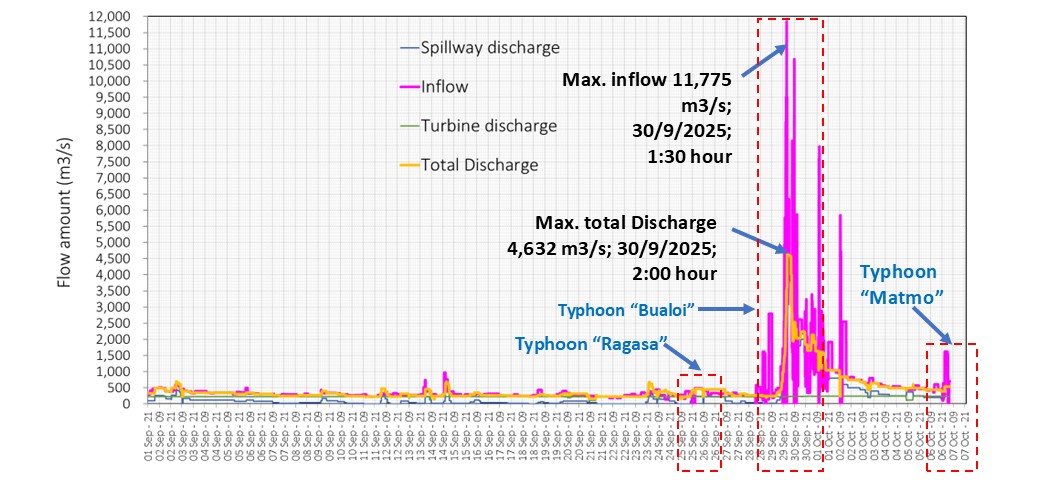
From 29 to 30 September 2025, Typhoon Bualoi passed north of the Nam Ngiep 1 reservoir, bringing continuous and intense rainfall across the region. Following the typhoon, an extremely large inflow was recorded — the maximum instantaneous inflow reached 11,775 cubic meters per second (cms).
Although the dam of Nam Ngiep 1 Power Company (NNP1PC) is designed primarily for power generation, it also provides incidental flood mitigation benefits by temporarily retaining part of the inflow. In this event, however, the rainfall associated with Typhoon Bualoi produced exceptionally large inflows, necessitating a discharge of 4,632 cms.
The chart below shows actual inflow and discharge data during the period. While discharge levels during Typhoon Ragasa (before Bualoi) and Typhoon Matmo (after Bualoi) were kept relatively low, the inflow caused by Bualoi was extraordinarily high, resulting in the large discharge.
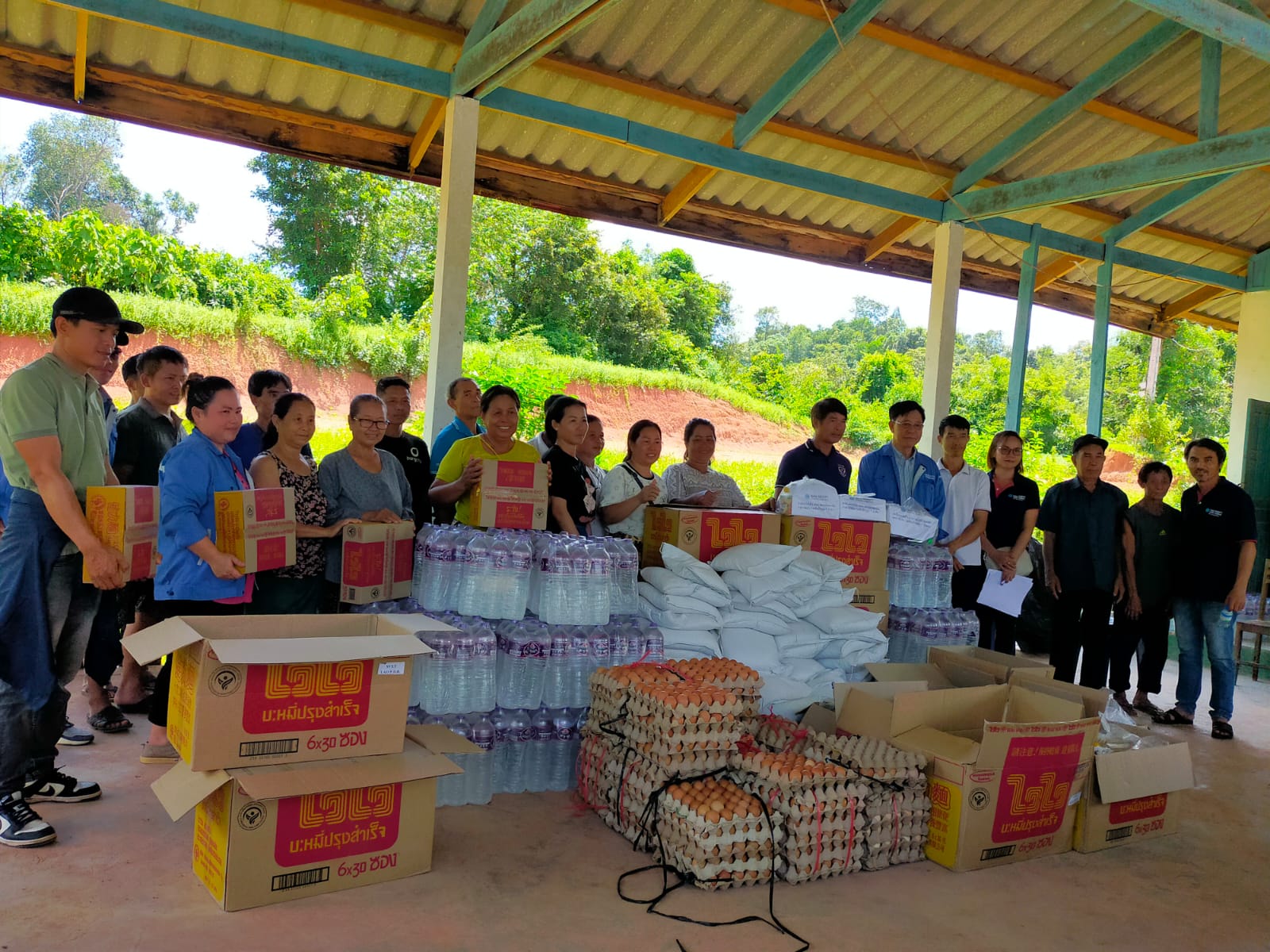
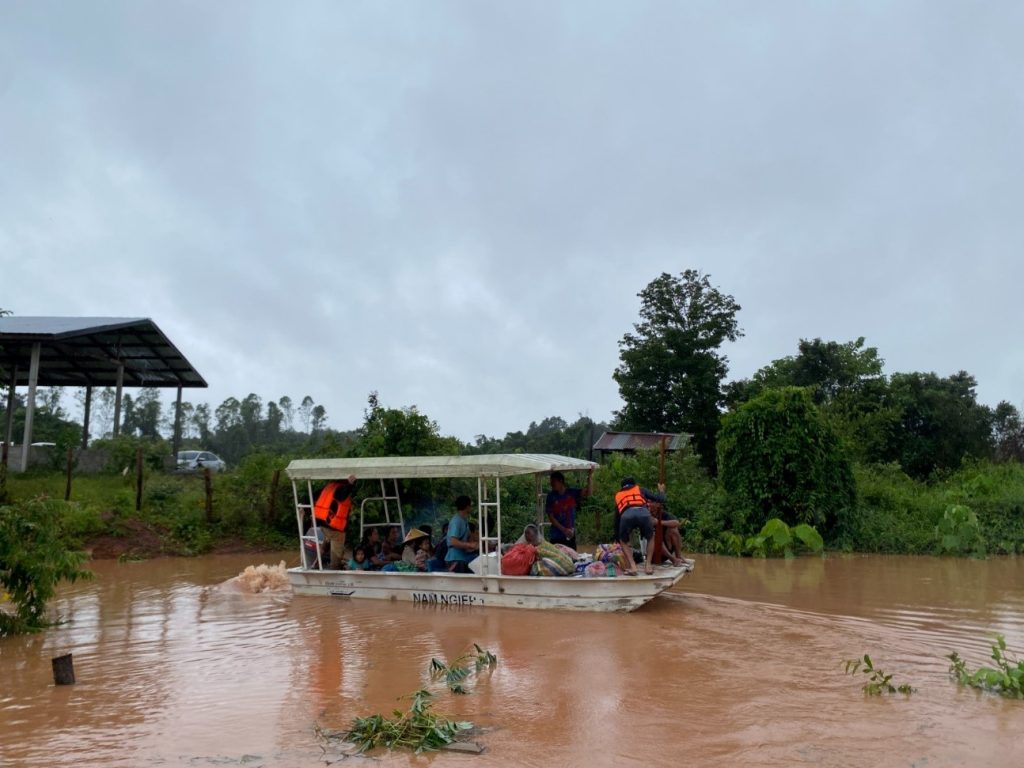
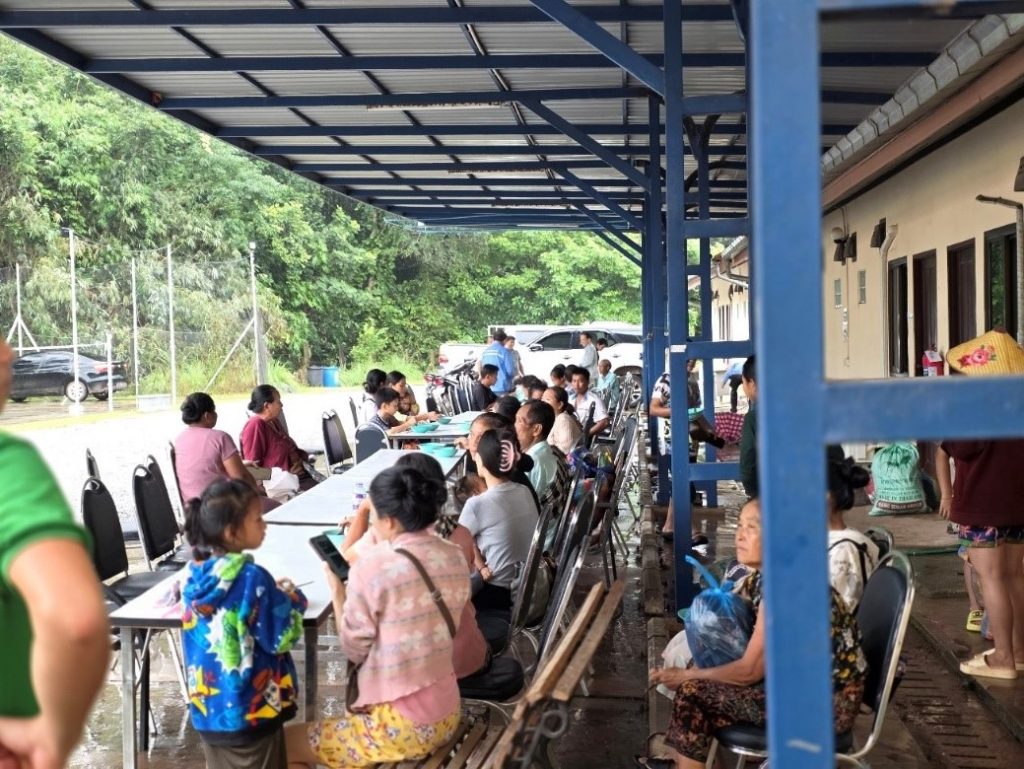
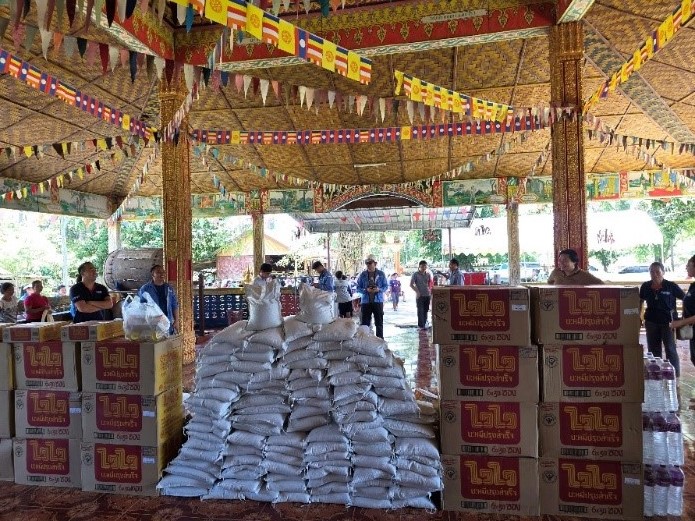
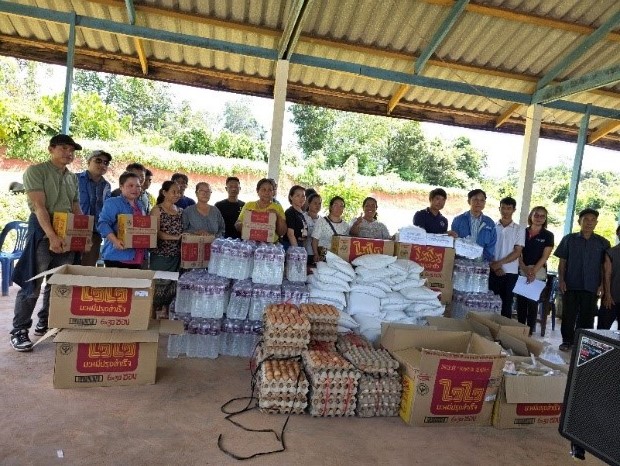
Due to the widespread rainfall and runoff caused by Typhoon Bualoi, flooding occurred in several nearby villages. Fortunately, there were no reported injuries, though some residents experienced health issues after prolonged exposure to rain. NNP1PC supported the evacuation of affected residents and provided temporary shelter at its facilities. Once the floodwaters receded, on 3 October 2025, the Company distributed food and relief packs to returning households. Since then, NNP1PC’s shareholder companies have also proposed additional donations, enabling continued support activities for nearby communities.
The heavy rainfall and resulting high inflows also affected NNP1PC’s operations. One generating unit was temporarily shut down, and several roads and facilities sustained damage.
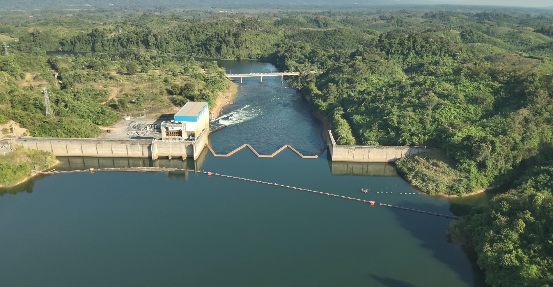
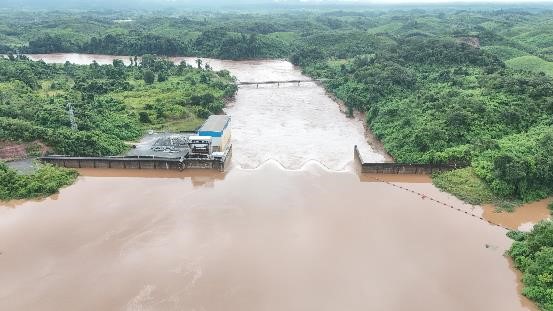
(Photographs show the re-regulation dam area before and after Typhoon Bualoi.)
Whether such extreme weather events will remain rare or become more frequent due to global climate change is uncertain. Nevertheless, NNP1PC is committed to learning from this experience and improving its operations and preparedness to better respond to future natural events.